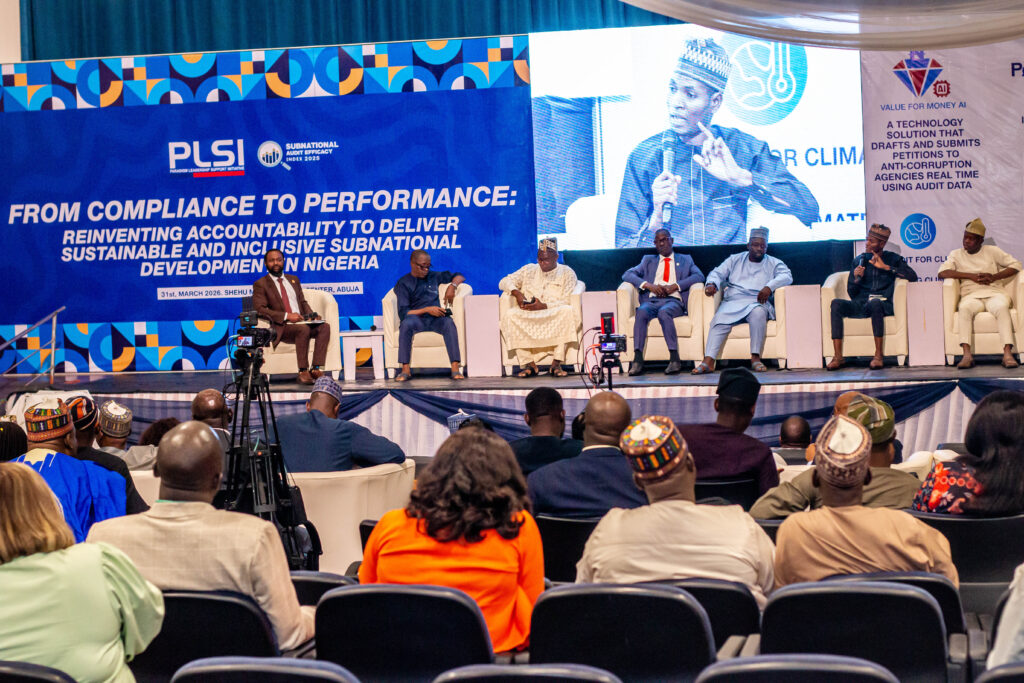
On 31st March 2026, Paradigm Leadership Support Initiative (PLSI) publicly launched the Subnational Audit Efficacy (SAE) Index 2025 in Abuja, its flagship annual research report that examines the level of transparency and accountability operational in the management of public funds and implementation of public policies in all 36 states of the federation of Nigeria through public audit and key actors in the public audit action cycle.
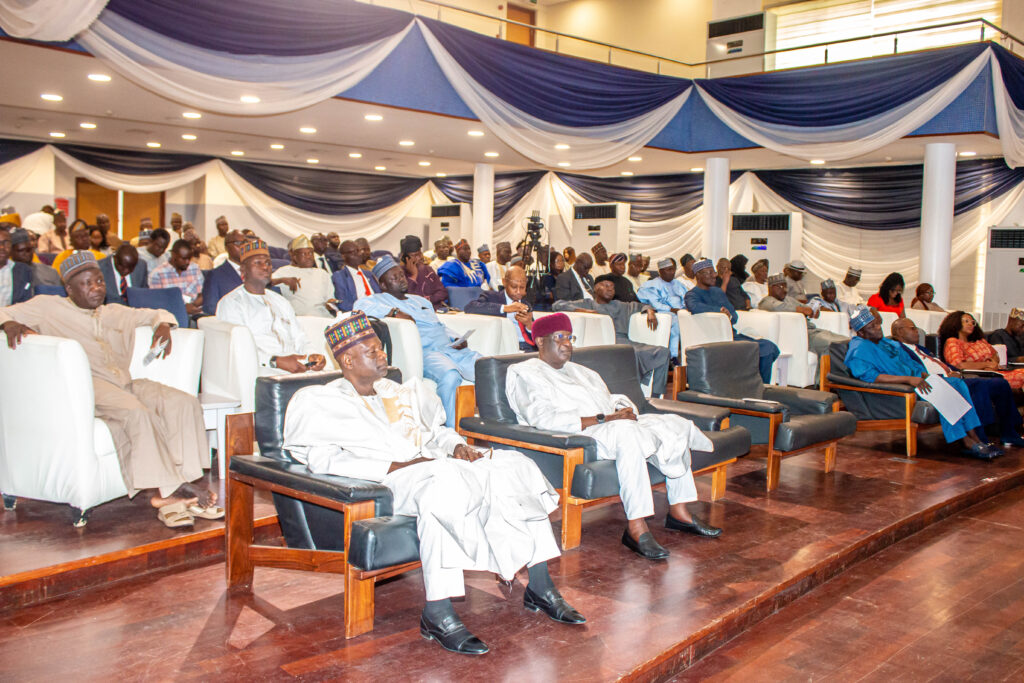
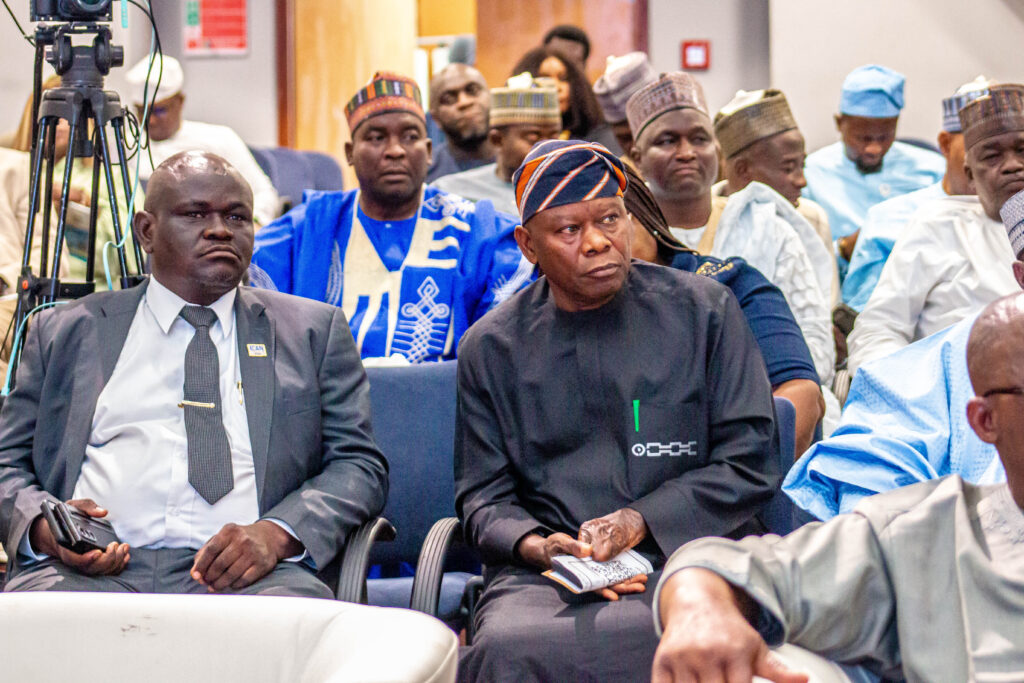
It was the gathering of State and Local Government Auditors-General, Accountant-Generals, Public Accounts Committees, Representatives of Federal MDAs, Civil Society Leaders, Development Partners, Media Professionals, Researchers, and reform-minded citizens around one central question: How transparent and accountable are Nigeria’s states, and how can accountability systems work better for citizens?
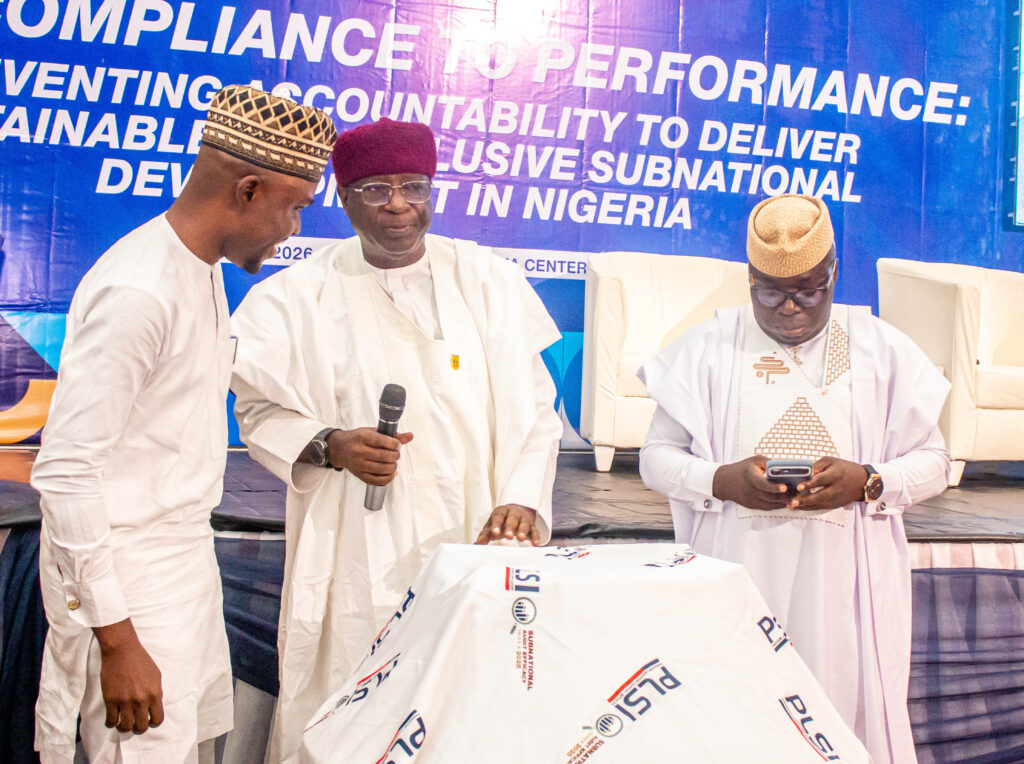
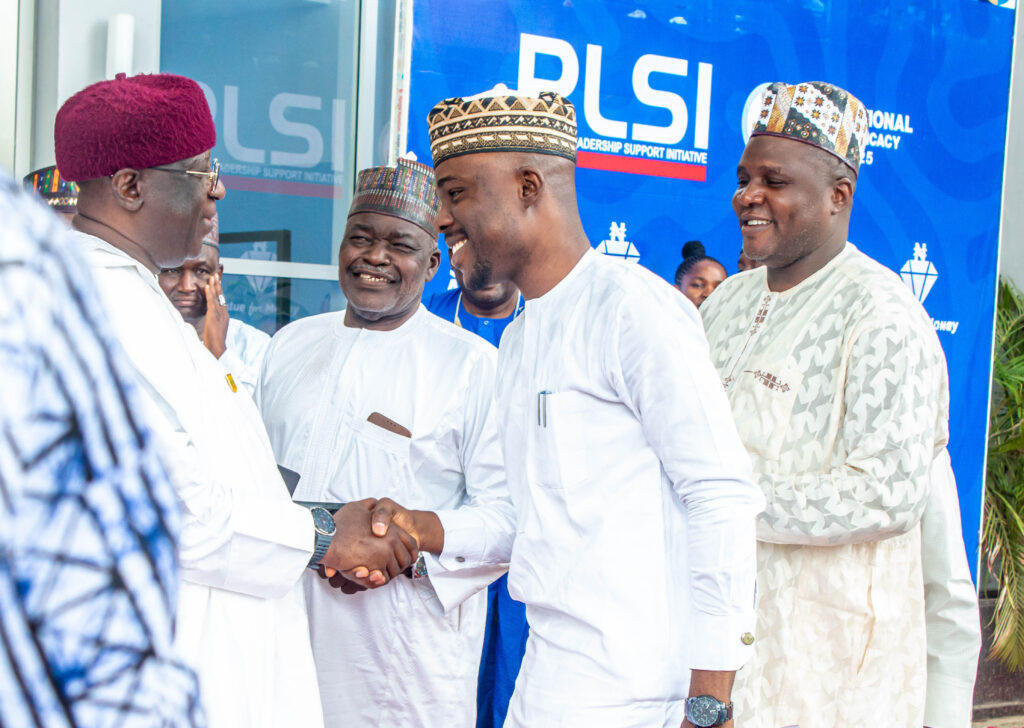
In attendance, notably, was the Governor of Yobe State, His Excellency Mai Mala Buni, CON, represented by the Honourable Commissioner for Finance, Alh. Muhammed Abatcha, MNI, FCNA, as well as the Speaker of the Ekiti State House of Assembly, Rt. Hon. Adeoye Stephen Aribasoye. Their participation was far more than ceremonial. It reflected a growing recognition among political leaders that public audit and accountability are central to development. It also reaffirmed the strong institutional partnerships PLSI has intentionally built over the years with subnational actors.
Themed “From Compliance to Impact: Reinventing Accountability to Deliver Sustainable and Inclusive Subnational Development in Nigeria,” the public launch was further enriched by high-level contributions from distinguished national and international stakeholders.
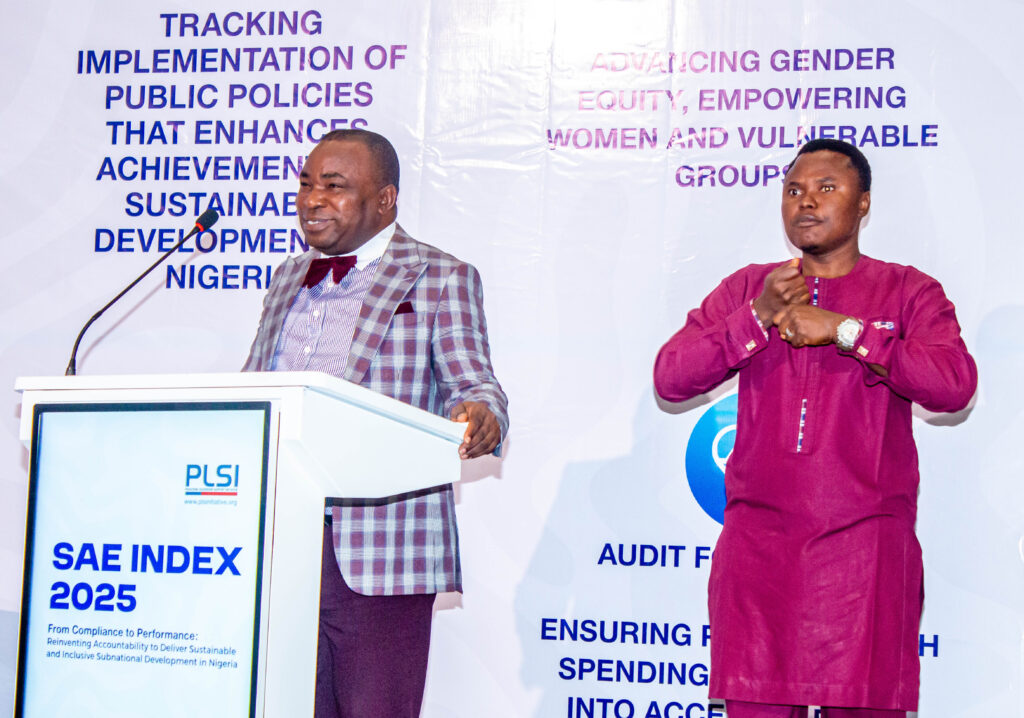
The keynote address was delivered by Freddy Ndjemba, Assistant Director-General at the INTOSAI Development Initiative (IDI), who underscored the importance of strong Supreme Audit Institutions in advancing transparency, development outcomes, and public trust.
Goodwill messages were also delivered by several esteemed leaders and partners, including Mr. Sunday Adegoke, Chairman of the Body of Federal and States Auditors-General in Nigeria; Mr. Babagana Laminu, Chairman of the Forum of Local Government Auditors-General; the representative of Mr. Shakaa Chira, the Auditor-General for the Federation; the representative of the Director-General of the Debt Management Office, Ms. Patience Oniha; the representative of Dr. ChiChi Aniagolu, Regional Director, Ford Foundation; as well as a special remark delivered on behalf of the Governor of Yobe State. Their presence and messages reflected broad-based support for strengthening public audit systems and deepening accountability reforms across Nigeria.
Being the sixth edition, the SAE Index public launch has become the largest civic-led convening of oversight institutions in Nigeria. The Index is built on a simple but powerful idea: while budgets tell citizens what governments intend to do, audits help reveal what governments actually did with public resources.
This year’s edition was particularly significant because PLSI introduced the first major modification to the methodology in six years. The review became necessary after Nigeria’s Supreme Court ruling granting financial autonomy to local governments. If local governments are to receive and manage greater resources directly, then accountability at that level must also be measured. As a result, the SAE Index 2025 expanded its framework to assess both state-level audit systems and local government audit structures.
To produce the report, PLSI’s research team collected, analysed, and validated data from audit institutions, Public Accounts Committees, Offices of Accountant-General, civil society organisations, and media actors across all 36 states. The methodology assessed legal frameworks, publication of audit reports, implementation of audit recommendations, production of Citizens’ Accountability Reports, evidence of performance audits, public participation, and legislative oversight. In practical terms, this means the Index did not rank states based on assumptions or politics, it ranked them based on measurable actions and evidence.
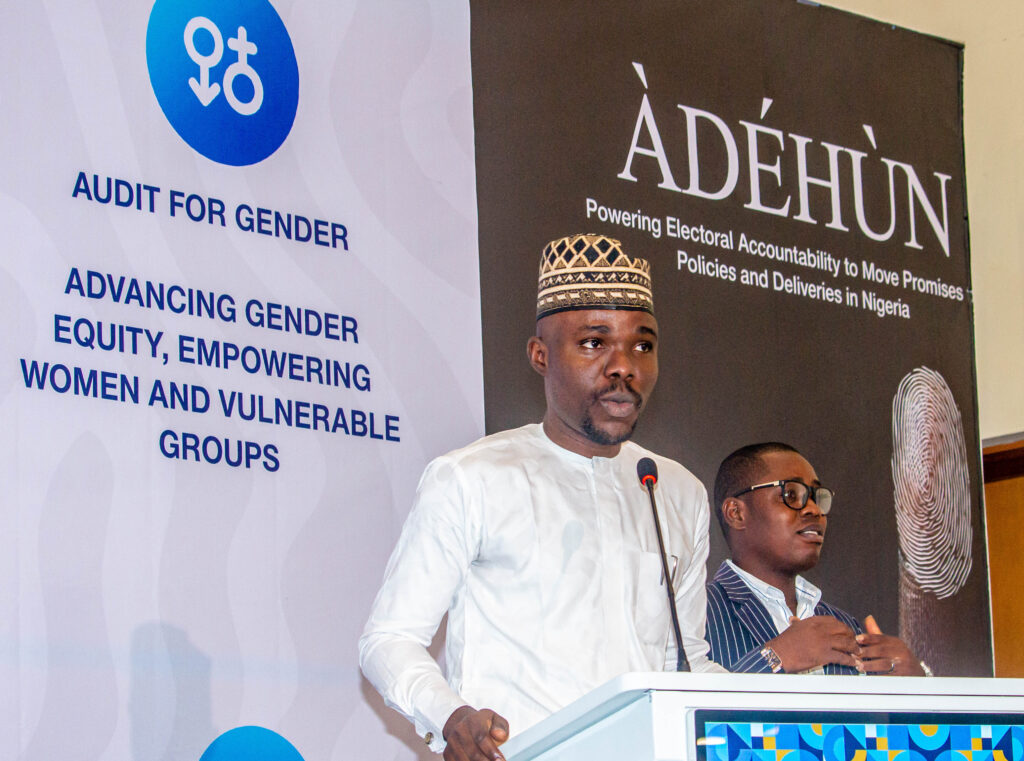
The 2025 findings also told an important story about reform momentum in Nigeria. In 2021, many states improved significantly, helped by reforms tied to the World Bank-supported States Fiscal Transparency Accountability and Sustainability (SFTAS) programme. But after that period, progress slowed. The national average score dropped from 31.81% in 2022 to 30.58% in 2023, and then further to 29.47% in 2024. Many accountability gains appeared to be stalling.
That is why the 2025 national average of 34.5% was one of the most important announcements at the launch. It represented a 5.03 percentage point increase and signalled renewed effort by accountability actors across the federation. For policy experts, this suggests that some institutions are beginning to respond again. For ordinary Nigerians, it means there is hope that oversight systems can improve. However, PLSI also made it clear that rising scores alone are not enough. A higher score only matters if it leads to better roads, functioning hospitals, safer communities, improved schools, and more responsible use of public money.
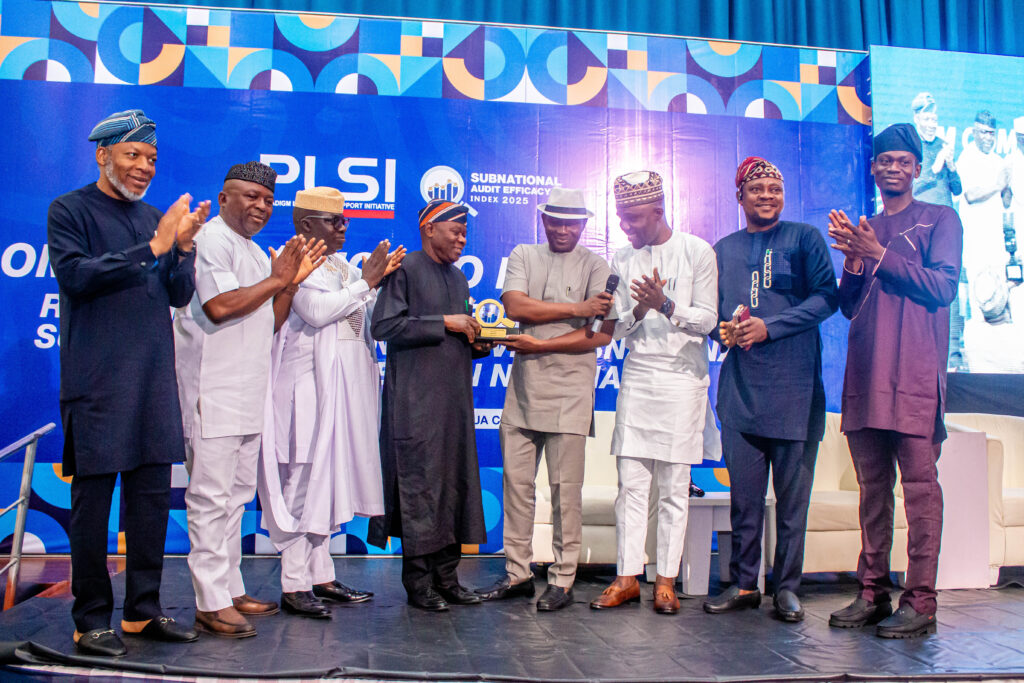
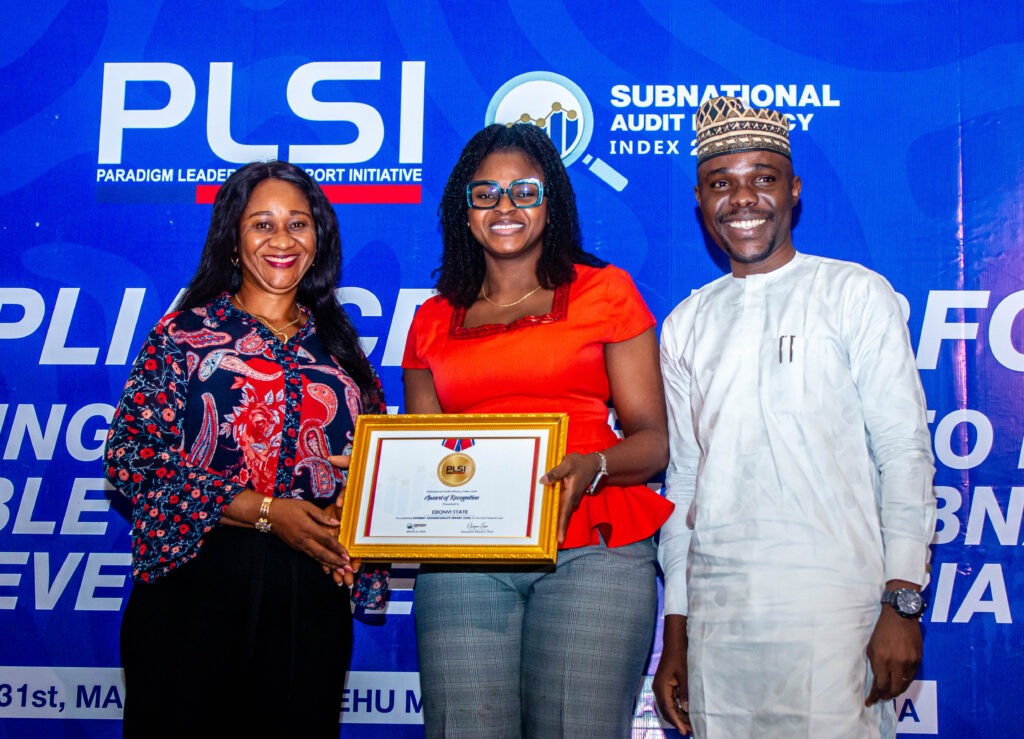
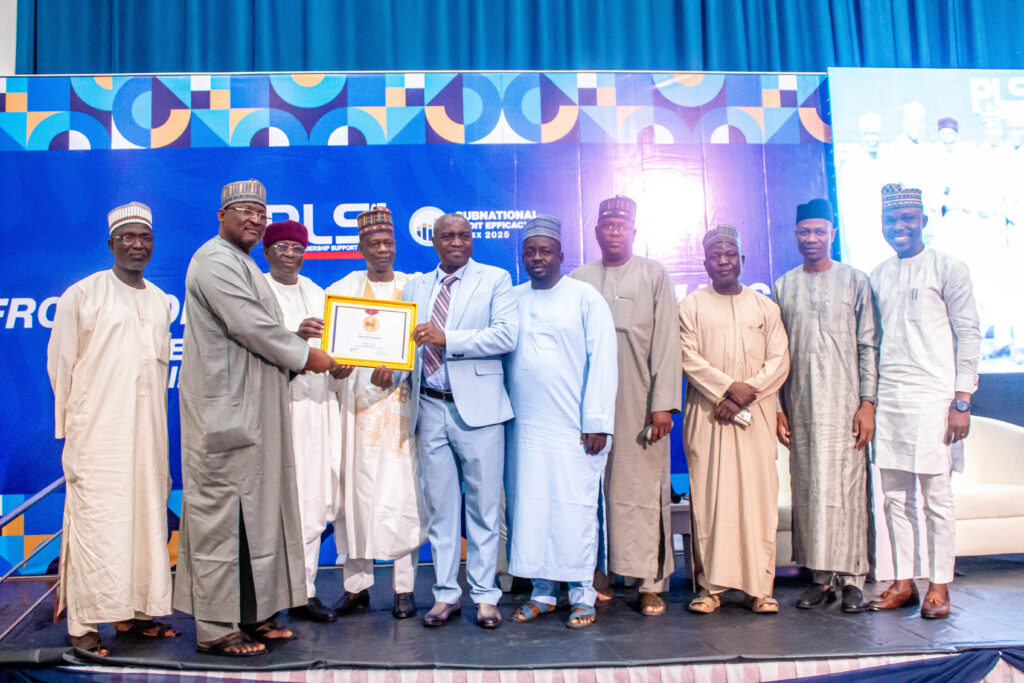
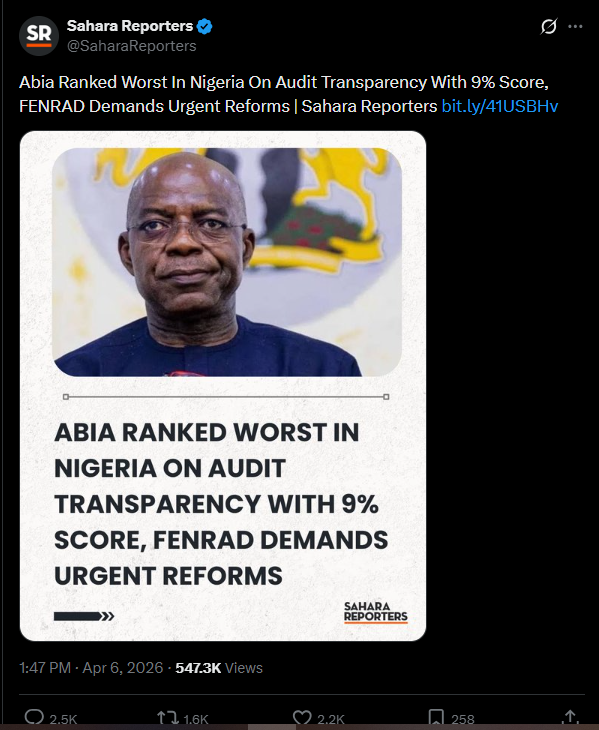
The rankings naturally generated widespread public attention. Ekiti State emerged first with 72%, Gombe and Yobe ranked jointly second with 68%, while Abia and Rivers ranked 36th with 9% each. These top performers were recognised for stronger systems and better performance across assessed indicators. Their performance matters because it proves that improvement is possible when institutions are intentional. If some states can strengthen audit systems, publish reports, and improve oversight, then others can do the same.
Yet beyond the rankings, the deeper value of the SAE Index lies in the findings that affect citizens directly.
One of the clearest findings was that audit independence remains weak across much of Nigeria. Only 5 states have implemented financial autonomy for the Office of the Auditor-General, while only 12 states have administrative independence structures in place. To the average Nigerian, this may sound technical, but it is deeply practical. An audit institution that depends excessively on the same executive arm it is meant to scrutinise may struggle to operate freely. Independence matters because auditors need freedom to ask difficult questions, publish uncomfortable findings, and investigate misuse of funds without fear or pressure. Where audit institutions are weak, citizens often pay the price through poor services and unchecked waste.
The report also found that data transparency is improving, but still far from where it should be. In the 2024 financial year, 18 states did not publish audit reports on state accounts, while 21 states did not publish reports on local government accounts. This means millions of citizens still cannot easily access official information showing how public resources were managed. For ordinary people, this is like contributing money into a community purse but never seeing the record of how it was spent. Without transparency, rumours thrive, trust declines, and accountability becomes difficult.
There was, however, encouraging progress in the publication of Citizens’ Accountability Reports (CARs). These are simplified, visual documents (using graphs and tables) prepared by State Audit Offices, to explain audited financial statements and budget performance to the public. In 2022, only 8 states published them. In 2023, the number rose to 11. In 2024, it reached 18 states. This matters greatly because democracy cannot work well if public information is available only to accountants and specialists. Citizens’ reports help market women, students, workers, journalists, and community leaders understand governance in plain language.
Another significant finding was the gradual emergence of performance auditing. Only three states (Yobe, Gombe, and Delta) produced standard performance audit reports on government programmes, projects, or policies. While the number remains small, it is important progress because performance auditing asks the questions citizens care about most: Did the road project actually solve transport problems? Did the health intervention improve outcomes? Did education spending deliver better learning? Traditional audits often focus on whether money was spent according to rules. Performance audits go further by asking whether spending produced real results.
The report also showed that oversight and public scrutiny remain limited. Only three states had effective Public Accounts Committees, while just four states demonstrated meaningful civil society or media participation in audit processes. For citizens, this means many audit findings may exist on paper but fail to trigger corrective action. A strong Public Accounts Committee can summon officials, demand explanations, and push for implementation of recommendations. Active media and civil society can keep public attention on unresolved issues. Without these actors, accountability reports can simply gather dust.
One of the most thought-provoking parts of the SAE Index 2025 was its gender insights. The report found that only 3 out of 36 states have female-led state audit institutions, while only 5 states have female-led local government audit institutions. This does not mean men cannot lead effectively, nor that women automatically perform better. Rather, it highlights a wider structural imbalance in leadership opportunities within public accountability institutions.
Why does this matter to ordinary Nigerians? Because leadership diversity often improves institutional thinking, responsiveness, and fairness. Where leadership spaces are too narrow, systems can become less representative of the populations they serve. In addition, the report found that gender-responsive auditing remains largely absent. This means many audit systems still do not adequately assess how public spending affects women, girls, vulnerable communities, and excluded groups. For example, if maternal healthcare funding is mismanaged or rural women are excluded from agricultural support programmes, a gender-sensitive audit system should be able to identify and question such gaps.
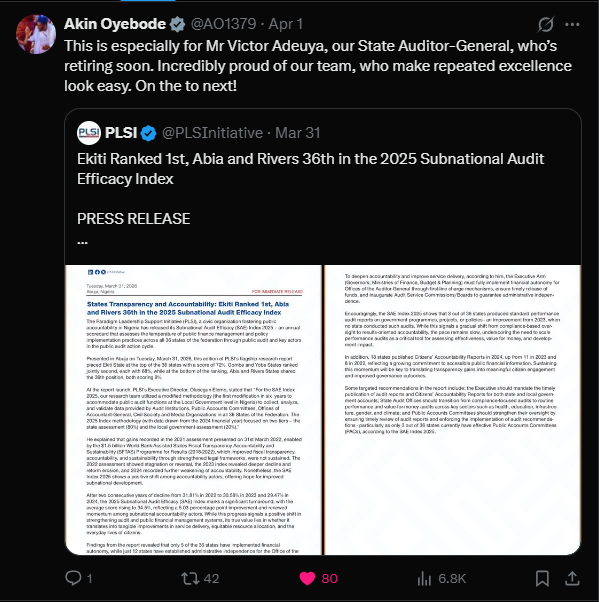
The public launch itself became a major story. Media platforms widely reported the findings. Clips from speeches circulated online. Citizens debated state performances. Radio stations invited PLSI representatives to discuss what the results meant for local communities. Social media conversations emerged around state rankings, reform gaps, and what citizens should demand from their governors and legislatures. For a subject once considered too technical for public interest, this level of engagement is remarkable.
Two months after launch, the message of the SAE Index 2025 remains urgent. States must move from symbolic reforms to real implementation by strengthening audit independence real time. Legislatures must strengthen Public Accounts Committees and enforce recommendations. Audit institutions must become more independent, modern, and citizen-facing. Civil society and the media must sustain pressure. Citizens must keep asking informed questions.
PLSI’s broader vision has always been clear: accountability should not be an elite conversation. It should be a public culture.
The SAE Index 2025 is therefore more than a report card. It is a tool for reform, a mirror for institutions, and a resource for citizens. It reminds Nigeria that development does not depend only on how much money is budgeted, but also on whether systems exist to ensure that money truly works for the people.

Two months later, the buzz continues because the need continues.
And until every state strengthens its accountability systems and every Nigerian feels the benefits of better governance, the work must go on.
Authored by: Sunday Taiwo
PLSI’s Communications Associate